
In hospitals, pharmaceutical manufacturing, and food processing plants, daily disinfection is a crucial step to ensure environmental safety and product quality. Hydrogen peroxide, valued for its highly effective sterilization capabilities, is a common choice for disinfection and sterilization. Its concentration typically ranges from 3% to 30%, with a 3%~5% concentration commonly used in medical disinfection. Even at lower concentrations, it can generate oxygen, which can erode the coating of pre-painted steel sheets.
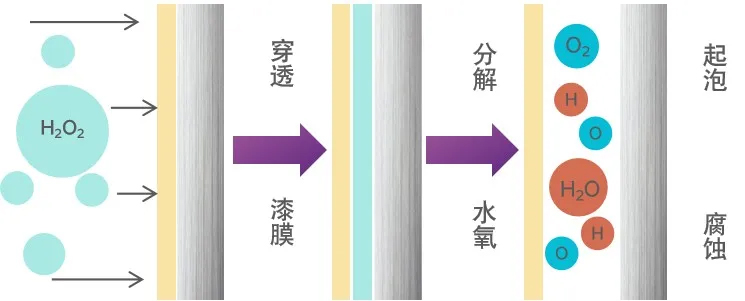
This is because hydrogen peroxide readily decomposes into water and oxygen. Under its influence, the paint film can blister and become damaged.
Tianjin Xinyu's hydrogen peroxide-resistant pre-painted steel sheets feature an upgraded paint formulation that addresses the vulnerability of ordinary sheets to corrosion when frequently exposed to disinfectants like hydrogen peroxide. This extends the service life of the steel sheets, reduces the maintenance and replacement costs of decorative building materials, and provides an excellent solution for protection in specific sectors.
Laboratory Test Performance
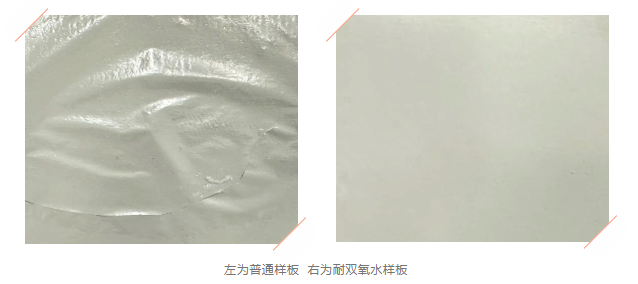
Tests conducted at the Tianjin Xinyu Laboratory Testing Center on the hydrogen peroxide-resistant pre-painted steel samples showed that the samples can withstand exposure to a 10% concentration hydrogen peroxide solution for up to 96 hours, demonstrating excellent hydrogen peroxide resistance.
Dense Paint Film
Tianjin Xinyu's hydrogen peroxide-resistant pre-painted steel sheets enhance the density of the paint film surface, resulting in a tighter and more robust paint film structure that prevents penetration and damage from hydrogen peroxide and other common disinfectants.
Resistance to Heat and Humidity
The sheets feature improved resistance to heat and humidity, maintaining stable performance even in damp disinfection environments.
Hydrogen peroxide-resistant pre-painted steel sheets are ideal for use in clean area interior panels within pharmaceutical and food production/processing plants, as well as in interior panels for spaces like hospitals that require long-term, frequent disinfection. They are an optimal choice for interior panel material in such high-demand scenarios.


